
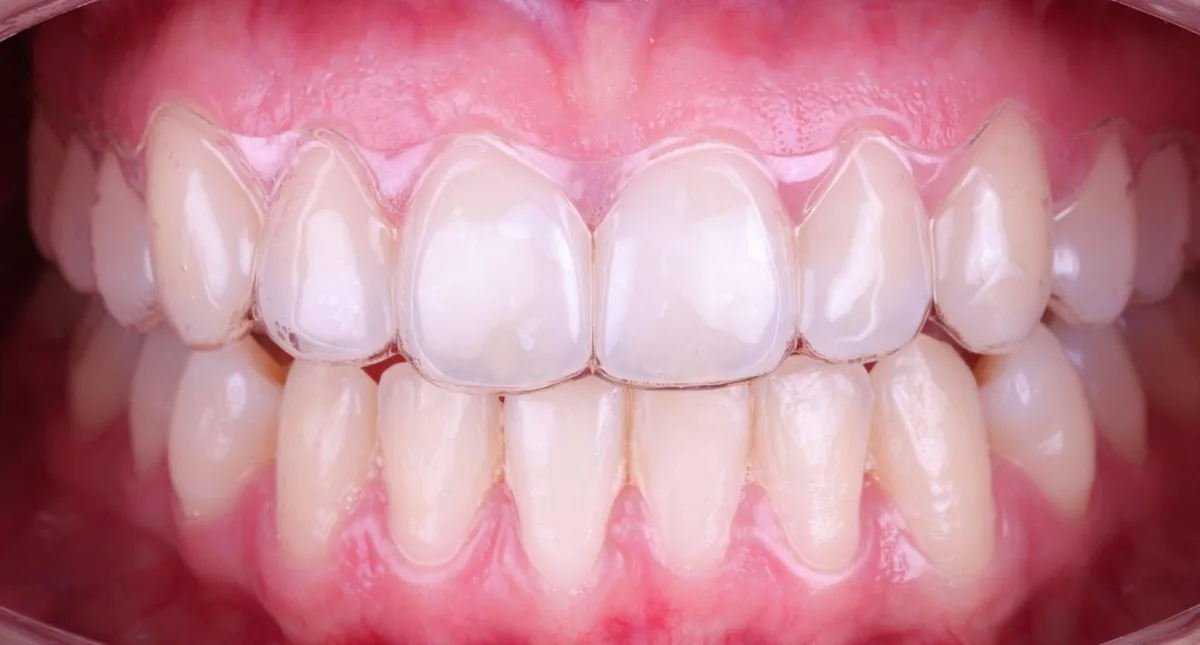
What clear aligners are
They are custom-made clear trays that are changed every one or two weeks. Each aligner moves the teeth a little, following the plan we design on your 3D study. You take them out to eat and to brush, and wear them the rest of the day: about 22 hours, including at night.
Unlike braces, they have no wires or ties, they are more comfortable on the lips and cheeks and they are barely visible. That is why people call it invisible orthodontics, although what really matters is not that it can't be seen, but that the movement is well planned.
How we plan your case in 3D
Before we move a tooth we study everything: a CBCT (an X-ray in three dimensions) to see the roots, the bone and the joint, and an intraoral scan that replaces moulds. With that study we decide which teeth move, how much and in what order, and we show it to you with your own case in front of you.
During treatment we scan again and superimpose the models: that way we measure in millimetres what has changed and adjust the plan if needed. This way of working is what led to tresD Models and tresD DICOM, the software we develop and that orthodontists in more than 80 countries use today.
tresD Aligner System or a commercial brand
We have our own aligner system: we design and make the aligners ourselves, with 3D printing, from your study. That lets us fine-tune every detail of the plan and react quickly if a tooth doesn't respond as expected.
Dr Manuel Fernández Cano also works with Invisalign, Spark, Angel Aligner, Smartee, ClearX and SureSmile. At the first appointment we explain the differences and choose with you the option that best fits your case and your priorities.
Which cases they are suitable for
Aligners solve most orthodontic problems: crowding, gaps between teeth, rotated teeth, crossbite or open bite, and relapse after previous treatment. In the most complex cases we combine them with small attachments, mini-screws or a phase with braces.
They are a good option for adults who don't want their orthodontics to show, and also for responsible teenagers, as long as they wear the aligners for the hours needed.
How long it takes and what the check-ups are like
Most aligner treatments last between 6 and 24 months, depending on the complexity. We see you every 6-8 weeks to check that the teeth are following the plan and to give you your next aligners. At the end we fit retainers, fixed or removable, so the result lasts.
At the first assessment appointment we examine you, take photos and a scan, and you leave with a personalised, no-obligation quote.
Caring for your aligners
Wear them all day and take them out only to eat and to brush your teeth, always change them before going to sleep and keep them in their case. Clean them every day with mild soap and cold water. All our care tips for patients with aligners.
 Book via WhatsApp