
Skip to content
ESBook now
Temporomandibular joint · Málaga

Temporomandibular disorders (TMJ) in Málaga

We see more and more patients with jaw pain, discomfort in the temporomandibular joint, difficulty chewing or limited mouth opening. We look for the source of the problem with every tool available and the best treatment option for each case.

Book your first appointment

First assessment appointment with a no-obligation quote · Clínica Áncora, Málaga

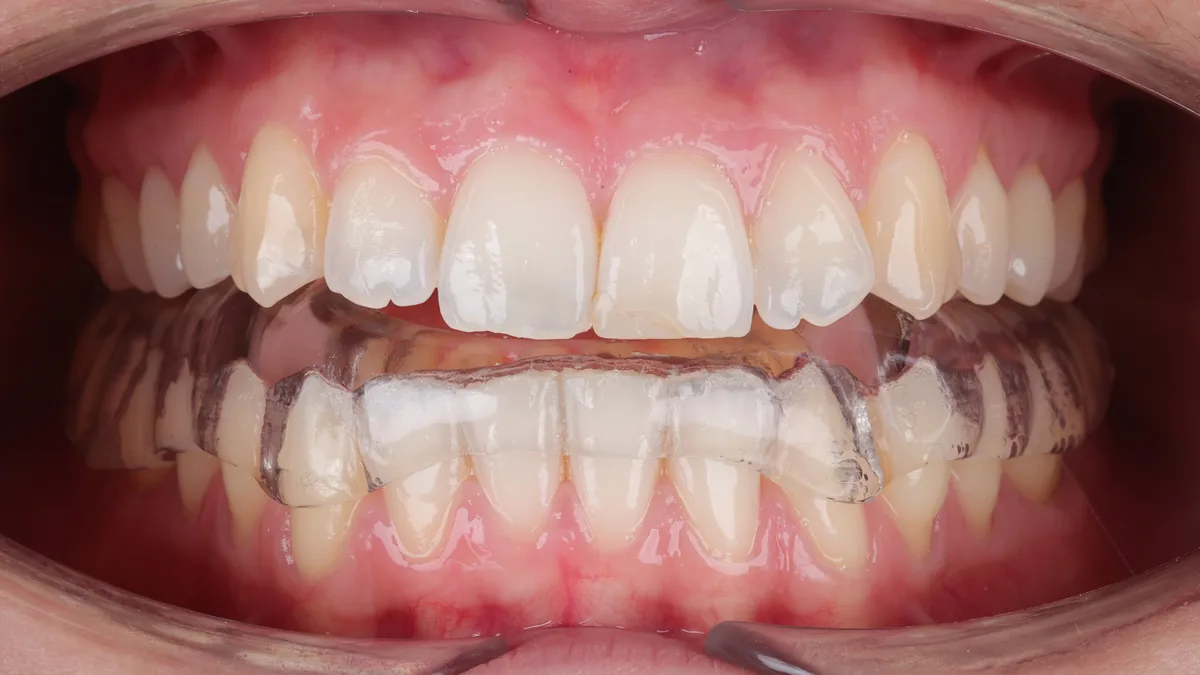
Clear occlusal splint fitted over the teeth of a patient with a temporomandibular disorder
TMJtemporomandibular joint
CBCT3D sections of the joint
VieSIDtrained at the Vienna school
UCAMTMJ lecturer on the postgraduate programme

What a temporomandibular disorder is

The temporomandibular joint (TMJ) connects the lower jaw to the skull, just in front of the ear. When the joint, the disc that cushions it or the muscles that move it don't work properly, symptoms appear: pain in the jaw or in front of the ear, clicking or grating when opening and closing, locking, difficulty opening fully, headache or neck pain, and tooth wear from clenching or grinding (bruxism).

How we assess it

We start by listening to you and examining you: how you open, what hurts, which muscles are tense, how your teeth fit together. When we need to see inside the joint, we take a CBCT and get three-dimensional sections of both condyles, at the clinic itself. With the intraoral scanner we mount your models in an articulator and study the relationship between your bite and the position of your jaw.

Dr Manuel Fernández Cano trained at the Vienna School of Interdisciplinary Dentistry (VieSID) and with Sistemas Ertty, and teaches the TMJ module of the UCAM postgraduate orthodontics programme.

Treatments

Most cases improve with conservative measures: a custom-made occlusal splint, advice to stop clenching, exercises and, when appropriate, physiotherapy or medication coordinated with other specialists. Not every case needs orthodontics.

When the bite contributes to the problem, we plan orthodontic treatment that looks after the joint: we look for a stable position of the jaw and move the teeth so they fit into it. This is the basis of the mandibular repositioning we teach in our courses for professionals.

TMJ and orthodontics

In all our orthodontic treatments, with braces or with aligners, the joint is part of the study: we look at the condyles on the CBCT before starting and check that the jaw ends up in a comfortable position at the end. Looking after function, not just aesthetics, is what sets us apart.

FAQ

What people ask us about the TMJ

Is jaw clicking serious?

Not always. Many people have clicking without pain and don't need treatment. If the clicking comes with pain, locking or difficulty opening, it is worth having it assessed.

Does a night guard cure TMJ problems?

The splint protects the teeth, relaxes the muscles and helps the joint stabilise. In many cases it is enough; in others it is the first step before correcting the bite.

Do I need an MRI?

It depends. The CBCT shows the bone of the joint; an MRI shows the disc and soft tissues. We only request one when we need it to decide on treatment.

Can orthodontics cause TMJ problems?

Orthodontic treatment that looks after the position of the jaw shouldn't cause them. That is why we study the joint before starting and monitor it during treatment.

Do you treat bruxism?

Yes. Clenching or grinding wears the teeth and overloads the joint; we assess it together with the TMJ and treat it with a splint, advice and, if needed, with other specialists.

Let's start by seeing you in 3D

Book your first assessment appointment with your orthodontist in Málaga: we explain your options and you leave with a no-obligation quote.

Clínica Áncora · Av. Sor Teresa Prat 57, bajo · 29003 Málaga, Spain
+34 652 193 193 · [email protected]